

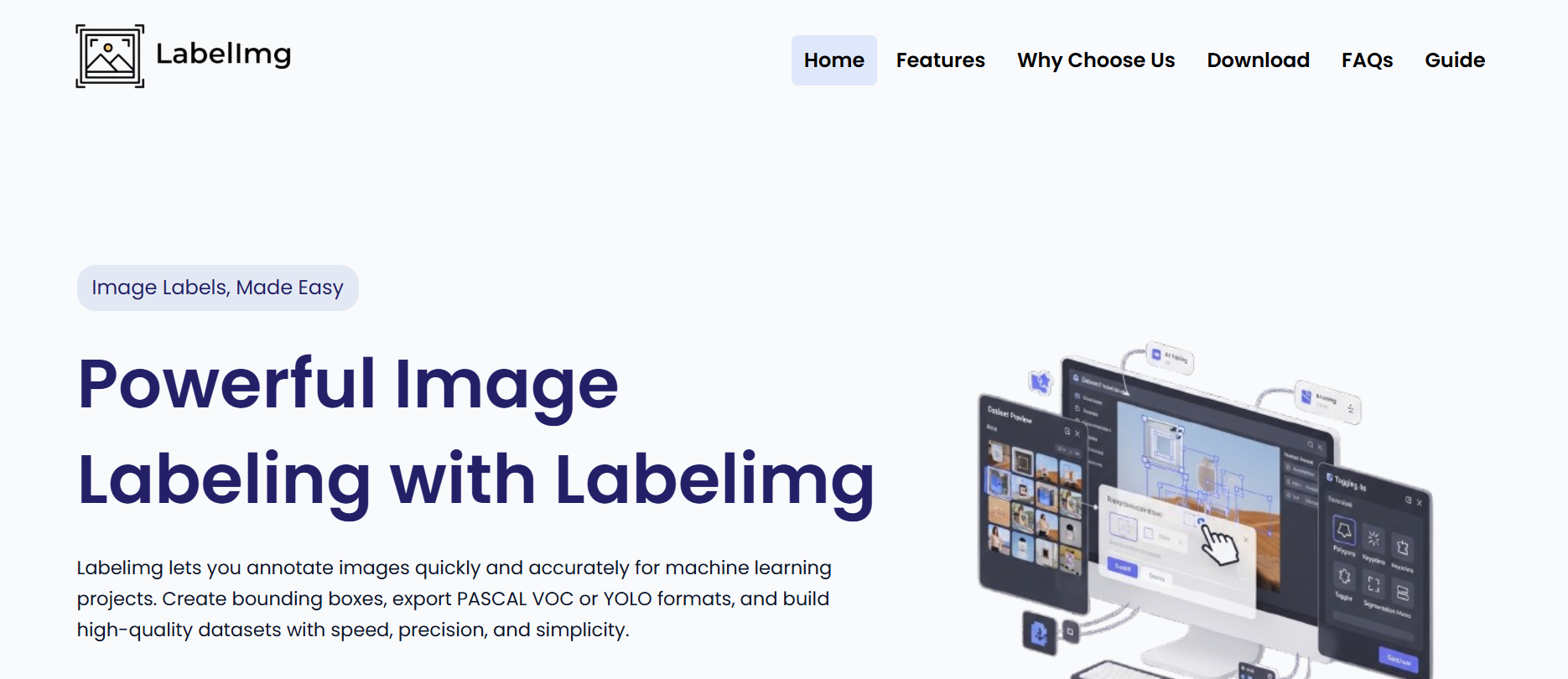
LabelImg is a widely used open-source tool in machine learning and computer vision projects. It is mainly used for labeling images to create datasets for object detection models. Many beginners who use this tool often wonder what programming language it is built on and how it works internally.
Understanding its technical foundation helps users better appreciate how the tool functions and why it is so popular in AI development workflows.
Core Programming Language
LabelImg is primarily built using the Python programming language. Python is one of the most popular languages in artificial intelligence, machine learning, and data science because it is simple, readable, and powerful.
The developers chose Python because it allows fast development and easy integration with machine learning tools and libraries.
Why Python Was Used
Python was selected as the main language for LabelImg because it offers many advantages. It is easy to write, easy to understand, and has strong support for computer vision and AI-related tasks.
Python also has a large ecosystem of libraries that make it easier to handle images, annotations, and dataset processing, which are essential parts of LabelImg’s functionality.
Graphical Interface Using Qt
Although the core logic of LabelImg is written in Python, the graphical user interface is built using the Qt framework through PyQt or PySide bindings.
This allows the tool to display windows, buttons, image panels, and drawing tools needed for bounding box annotation. Without Qt, LabelImg would not have its user-friendly graphical interface.
Open-Source Nature of the Tool
LabelImg is completely open-source, which means its Python source code is publicly available. Developers can view, modify, and improve the software according to their needs.
This openness has contributed significantly to its popularity in academic research and machine learning communities.
Role of Python in AI Integration
Since LabelImg is built in Python, it integrates easily with popular machine learning frameworks such as TensorFlow, PyTorch, and YOLO.
The annotations created in LabelImg can be directly used in model training pipelines without needing complex conversion processes.
Cross-Platform Capability
Python also makes LabelImg compatible with multiple operating systems including Windows, macOS, and Linux. This cross-platform support allows developers and researchers to use the same tool regardless of their system environment.
It ensures consistency in dataset annotation across different platforms.
Python Dependencies in LabelImg
LabelImg relies on several Python libraries to function properly. These include libraries for graphical interfaces, XML processing, and image handling.
These dependencies work together to support features like bounding box creation, file saving, and dataset organization.
Importance of Python in LabelImg Development
The use of Python makes LabelImg lightweight, flexible, and easy to maintain. Developers can quickly fix bugs, add features, and adapt the tool for different annotation workflows.
This flexibility is one of the main reasons it remains widely used in machine learning projects.
Conclusion
LabelImg is built primarily using Python, along with the Qt framework for its graphical interface. Python makes the tool simple, flexible, and highly compatible with machine learning frameworks.
Because of this strong Python foundation, LabelImg continues to be one of the most popular tools for image annotation and object detection dataset creation.
