


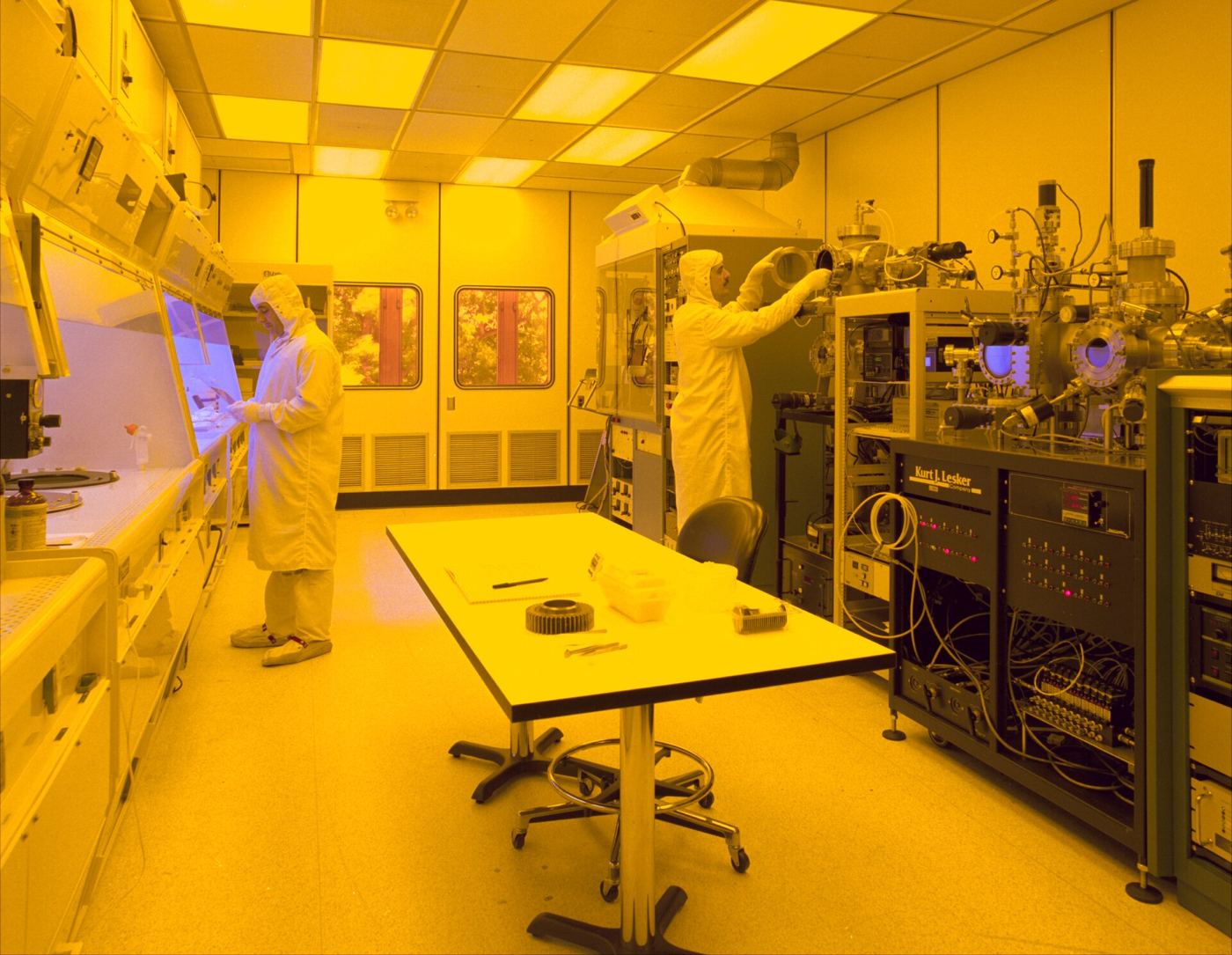
The most advanced computer chips are printed with extreme ultraviolet light, and that light cannot be handled with ordinary lenses, which absorb it completely. Instead, lithography machines steer it with mirrors coated in dozens of alternating layers of molybdenum and silicon, each layer only a few atoms thick. These mirrors must reflect as much of the fragile light as possible while holding a shape accurate to a fraction of an atom across their surface, because any distortion blurs the circuit patterns being printed. Manufacturing them is one of the least visible bottlenecks in the entire semiconductor industry. A single flaw in the coating stack, a speck of contamination or a slight error in polishing can render a mirror worth a fortune unusable, and inspection tools must find defects smaller than the features the mirror will help create. Production volumes are tiny by factory standards, lead times are long and only a handful of facilities worldwide can do the work. As chipmakers order more lithography systems to meet demand for artificial intelligence processors, mirror capacity quietly constrains how fast the supply chain can expand. Engineers are responding with improved deposition control, better metrology and repair techniques that can smooth or compensate for certain defects rather than scrapping the whole optic.
What the Evidence Shows
The physics imposes hard limits that clever engineering can approach but not repeal. Even the best multilayer mirrors reflect only around seventy per cent of extreme ultraviolet light, so a system using many mirrors loses most of its light before it reaches the wafer, demanding extraordinarily bright sources. Next-generation machines with larger optics and steeper angles stretch coating technology further, since the reflective layers must perform consistently across curved surfaces and varying angles of incidence. Research into alternative coating materials promises small gains that translate into real throughput at factory scale. There is a strategic dimension too: because the capability is concentrated in so few places, governments treat mirror and lithography supply as critical infrastructure, and disruptions would ripple through every industry that depends on advanced chips. For most people, the mirror story is a useful reminder that progress in computing rests on physical craft as much as on design brilliance. Transistors shrink because someone learned to polish glass flatter, coat it more evenly and measure it more honestly than before. Inside every advanced processor, in other words, sits the accumulated precision of optics workshops, and keeping that pipeline healthy is now a central task for the chip industry. Reporting and analysis from sources such as MIT Technology Review track the same developments, and specialists following extreme ultraviolet mirrors for chipmaking say the direction is now consistent across independent lines of evidence.
The Wider Context
The wider context is an industry learning to ship capability and restraint together. Products built around extreme ultraviolet mirrors for chipmaking now launch with safety evaluations, usage data and rollback plans as standard, because enterprise buyers and regulators ask for them in the first meeting. Companies that treated those questions as friction are discovering they have become the purchase criteria.
What Happens Next
What happens next for extreme ultraviolet mirrors for chipmaking depends less on another breakthrough than on the unglamorous work of reliability, pricing and support. The buyers evaluating it now are not enthusiasts; they are operators with budgets and auditors, and their checklists will decide the timeline. On the evidence of the current pilots, the technology has earned the right to be judged by them. You can follow related developments in our coverage of technology.
